Friday, September 30, 2011

Trend: HTML5 as the next emerging standard

Trend: HTML5 as then next emerging standard
Title: how mobile Facebook was designed to write once and run anywhere.
Comment: The most downloaded app of all time.. Written by Facebook in Html5. AND how not to write an app 5 times!

Ps.. The answer is to wrap web app inside the native app!

Link: http://www.readwriteweb.com/mobile/2011/09/how-facebook-mobile-was-design.php

Facebook has the most downloaded native application of all time. It also has perhaps the most visited mobile website of all time with nearly 350 million users and growing from feature phones to the smartest smartphones. It is available everywhere. The company started working on mobile solutions in 2006 and since then have grown with the times, using the tools available to them as they went along, from m.sites and WebKit touch interfaces to now the precipice of HTML5. Facebook's creed, or really just a way to make their developers' lives easier, is to write once and run everywhere. This has been next to impossible.

Facebook mobile is predicated on browser technology. As Facebook's engineering manager Dave Zetterman says in the transcript below, the browser is what Facebook is good at, how it got to the point it is at now and how it is going to iterate for the future of mobile. We will touch on the future tomorrow, but be sure to read Fetterman's presentation at Facebook's f8 developer conference below because it will inform what we are going to explore tomorrow morning. Really, how did Facebook design for all those platforms and devices?

What is below is a direct transcript with photos from Fetterman's f8 presentation. A few things to note:

Facebook mobile has its backbone in its mobile website. Everything that is built into the native applications actually comes from the mobile Web. Think of the way PhoneGap wraps a browser-based website and that is how Facebook approached the problem. And then some.

HTML5 is the future. The fourth page gets into how all of this history is leading Facebook to a precipice of change with HTML5 and the so-called Project Spartan.

Also note that Fetterman talks fast and occasionally swears. He is the classic Facebook engineer: kind of young, pretty brash and supremely confident. The transcript is as true to his actual words as possible.

Trend: mobile OS wars and the advance of open source

Trend: mobile OS wars and the advance of open source
Title: Amazon Looking to Buy Palm [REPORT]
Comment: out of the frying pan. Oh well.. At least well still be able to get somebody to support the Pre
Link: http://mashable.com/2011/09/30/amazon-looking-to-buy-palm-report/

Amazon wants to buy Palm and its smartphone/tablet platform WebOS, VentureBeat reports citing a well-placed source.

There are other interested parties, but Amazon is nearest to completing the deal, the same source claims.

After HP gave up on the tablet business, rumors started swirling about possible buyers for Palm and WebOS – a platform which showed a lot of promise even in its early days, but was never given a chance to shine as Palm changed hands.

Recent reports that Samsung was interested in acquiring Palm were quickly shot down by the company CEO Choi Gee Sung. HTC, on the other hand, carefully let the world know that it wouldn’t mind having a spare mobile OS on its hands, although CEO Cher Wang was careful not to go into specifics.

Now Amazon rises as the next likely contender. The company recently shook the world of tablets by introducing a cheap 7-inch device, Kindle Fire, which has something in common with the tablets from HTC and Samsung – it’s Android-based.

After Google’s purchase of Motorola Mobility, focusing one’s entire tablet/smartphone strategy on Android quickly became a lot less attractive, so it seems as if it’s just a matter of time until someone takes Palm off HP’s hands – probably at a big discount.

If Amazon really does acquire Palm and WebOS, it would probably have to completely switch future Kindle Fire products from Android to WebOS, as it doesn’t make much sense for a company whose hardware devices are just a front to offer users content to develop tablets on two operating systems at the same time. But Amazon has shown a lot of commitment and patience with its e-reader and tablet products, and we’re quite sure it could integrate WebOS into its long-term tablet strategy.

Thursday, September 29, 2011


Trend: changing media content distribution models
Title: Who is watching videos online
Comment: rural increase? Hunh???

Link: http://mashable.com/2011/09/28/youtube-planet-whos-watching-videos-online-infographic/

Videos are just about the biggest thing on the Internet right now, according to a study from Wistia, a video-hosting company.

The infographic shows that 71% of Internet users visit video-sharing sites like YouTube and Vimeo. This number has shot up from just 33% in 2006. The graphic also shows interesting demographic stats like the fact that minorities and people with kids are more likely to visit video sites.

Perhaps the most surprising part of the infographic is that the stats seem to be similar across multiple demographics. For example, gender, household income and education level all have little impact on the amount of time spent visiting video sites.

Is video the great equalizer? Are we just spending too much time on YouTube? Check out the graphic below and let us know your thoughts.

Trend: Tablet OS

Trend: Tablet OS
Title: amazons kindle fire: a tablet more dangerous to iPad then android
Comment: And then there is Amazon.. The next gen.. Lovely. Just lovely. 199 bucks.. Huge content, beautiful picture. Runs android, plays hd moves, mp3 and a billion books..oh and no middle man.

Link: http://thenextweb.com/mobile/2011/09/29/amazons-kindle-fire-a-tablet-more-dangerous-to-android-than-ipad/

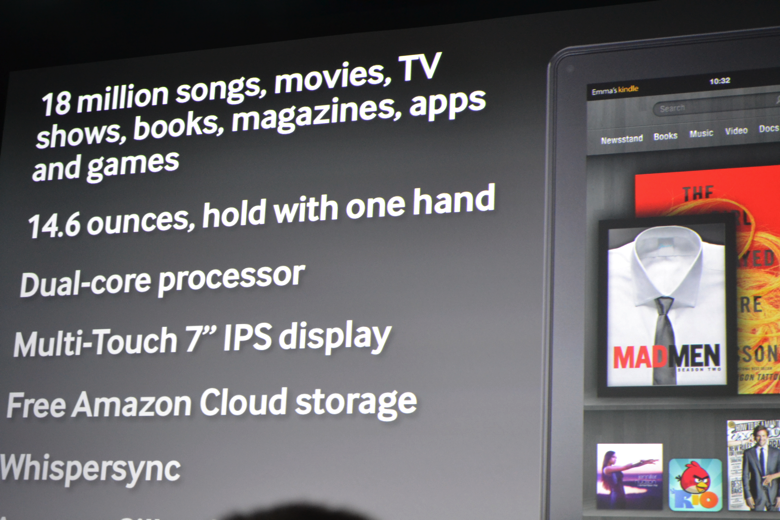
Amazon launched its Kindle Fire tablet at an event in New York City this morning. The tablet has most of the features that have been expected of it. It’s a 7″ bare-bones tablet running on a fork of Android that serves as a portal for people to consume Amazon’s content.

Almost immediately we have seen post after post on tech sites that are shouting ‘iPad-killer!’ because those are the headlines that drive clicks. At least, I’m hoping that’s why they are there and people don’t seriously consider that position to be accurate. The Kindle Fire does absolutely compete with the iPad on some levels, you can’t deny it, but it is also not a direct competitor.

The Kindle Fire is a targeted missile with a laser-like focus on providing consumers with an affordable and attractive tablet that will allow users access to Amazon’s web services and media offerings. During the presentation this morning, Amazon CEO Jeff Bezos spent a lot of time talking about media; how media would be delivered to the Fire, and how it would be synchronized. He spent very little time talking about apps.

This focus on the core experience of the tablet and not on applications is telling. Amazon is telling the people interested in purchasing the Fire that the most important apps are already built-in, the ones that allow them access to Amazon content like books, movies and magazines.

The fact that the Kindle Fire will come pre-loaded with the user’s own content and Amazon account info is a master stroke of a sales tactic, as it was with the original Kindle. But it’s also an indicator to new Fire owners: here is your content, now buy more.

This fits in with the fact that, although I call it a tablet here, Amazon was careful to refer to the Fire as ‘a Kindle’. In this way, it is able to position it as an attractive purchase for those in the market for a Kindle, not just a ‘tablet’. This is similar to the way that people recognize the iPad as its own market and not really part of the tablet market as a whole.

Amazon has already defined a ‘Kindle market’ and the Fire will sell well there regardless.

Android who?

Amazon’s extensive efforts to position the Kindle Fire as a media consumption device were almost completely unbroken by any other message during the presentation. At the end Bezos quickly demonstrated Fruit Ninja as a sort of nod to the fact that, yes, you will be able to use Android apps on this thing. But, once again, it was a game, not any sort of productivity app like the bundled email client.

This did a lot to disguise the fact that the Fire runs on an Android 2.x fork that is built from the open-sourced segments of Google’s OS. Bezos even said that “it’s hard to believe that there is even Android under there,” when talking about its appearance.

In fact, the Kindle Fire runs on something but you can’t actually call it Android, because that is technically a Google trademark on the version of its OS that contains Google apps and branding. So this OS is based on the portions of Android that are available as open source, but then has been tweaked significantly from there.

This means that any improvements that Amazon makes on top of that, including proprietary apps, won’t benefit Android at all. In fact, they basically just swooped all of the development that Google put into it and are effectively giving them back nothing. Not the cachet of having the OS run on Amazon’s tablet, not a kickback for licensing and not the all-important information and advertising that Google harvests from every official Android device.

Competition

This is compounded by the pricing of the Kindle Fire. At $199, with a stripped-down list of features, it is not competing with the iPad on its own turf. Instead, it will carve off a slice of the potential iPad market that is only interested in a great tablet for looking at things. I believe that this section of the iPad’s current market — or potential future market — is most likely fairly small. Once again, if people want an iPad, they buy an iPad.

So where will the most likely sizable market for the Kindle Fire come from? From the portion that would have otherwise purchased whatever less expensive alternative there was, namely Android tablets.

Android tablets from Samsung, Motorola and RIM have had little to no success against the iPad so far and that doesn’t look to change soon with predictions of the iPad market only growing. Amazon is placing the Fire solidly in the $200 market, undercutting the majority of Android tablets currently on the market, the cheapest of which (the heavily discounted PlayBook) is still $50 more.

Regardless of how much better the hardware of, say, the Samsung Galaxy Tab is, it just has not had the ability to gain traction in the market. But if you’re looking for a culprit, don’t blame Samsung, blame Android. The Kindle Fire shows just how far behind Google still is with creating an ecosystem to drive tablet adoption.

Bezos pounded out the web services that Amazon was going to leverage to push the Kindle Fire adoption rate forward: Amazon’s Appstore, MPS, Prime with video on demand, web services and Kindle store. All of these have their nozzles planted firmly into the Kindle Fire, ready to pour out content…for a price.

In the short term this will drive adoption, because people will associate their content with the device itself. If they want to read or watch anything purchased from Amazon, they’ll just pick up the cheap tablet that lets them do that, rather than downloading and side loading and converting that content. That’s a thing of the past.

In the long-term, it will enhance the lockin that Amazon has already nurtured with its one-click shopping and its family of successful Kindle devices. This is the same kind of lockin that Apple benefited from when it launched the iPad with millions of iPhone and iPod touch devices already out there, and 70-80 pieces of content per-device already purchased and waiting to be loaded up.

Apple and Amazon did the footwork when they spent 10+ years building an ecosystem of content delivery and lockin that Google is just beginning to feel the lack of.

Bezos feels that Amazon is the leader in this market, saying that “In terms of market share, Amazon is Coke and there isn’t yet a Pepsi.”

This is exemplified in the fact that Amazon Prime members get unlimited streaming of movies and TV shows, right out of the gate. This is a deal that is unmatchable by Google, or Apple for that matter. It’s simply a fantastic hook for anyone who has a Prime account already to say, ‘well, why don’t I get one of these things?’

iPad

The Kindle Fire and the iPad are simply aiming at different parts of the same market. A tablet is often used in the home, but away from the computer and — to a lesser but still great degree — it is used on the go to consume content. Both the iPad and the Kindle Fire are good for this, but the iPad is placed at the pinnacle of what is possible in terms of price and design. The Kindle Fire is aimed squarely at the middle of the market.

The lack of the audio input, Bluetooth and camera are all very clear signs that the Kindle is not intended to care what you want to make, it wants to show you things. Things that you have purchased through Amazon.

Amazon as a company has a history of knowing its strengths and playing to them. It is unlikely that no thought was given to whether Amazon could craft a tablet that would compete at the top of the market, and there are even rumors that Amazon is prepping a 10″ version for the future. But as far as the Fire goes, Amazon has delivered something that speaks to its strengths as a peddler of content.

The iPad is sold for the value of its hardware and it makes a hefty profit off of that. Amazon raced to the bottom of the market with the Kindle so that it could saturate the market with devices that allowed people to purchase more of its content.

It is two very different approaches to the same market and will be conflated only by those with little understanding of the motives involved.

Apple’s content delivery business is substantial enough that it would be massively successful business for any number of other companies, but to Apple it is a drop on the bucket.

For Amazon, the content is the thing. It is interested in having hardware in the hands of as many people as possible that are ready to devour Amazon’s books, movies and other digital content.

These fundamentally different approaches are demonstrated in the pricing, design and marketing of these two devices. In the end, Android tablets are the ones that will suffer the most, smashed between a low-end and high-end option, each backed by a powerful ecosystem that thrives on creating and keeping customers.

Amazonian

The Kindle Fire is a threat, but not to the iPad. Instead, it’s a threat to all of the Android tablets that will feel overpriced and devoid of content once Kindle’s start arriving at customer’s doorsteps filled with their own content and the iPad packing iOS 5 automatically syncs all of their existing apps and music wirelessly.

By comparison, Android tablets, devoid of even an official music store or movie rental service, will feel like empty, overpriced husks. The Kindle Fire isn’t an iPad killer, nor is it the best tablet you can buy. But it is very Amazonian, and that has proven to be a very good thing.

The iPad will maintain its lead, for many reasons that I have discussed elsewhere. But the Kindle Fire is set to cut a swath through the ranks of the lower-priced, content-poor Android competition.

JOIN TNW MOBILE ON: OR RSS

Trend: Tablet OS

Trend: Tablet OS
Title: RIM details Android compatibility, apps written with NDK see Canadian visas declined
Comment: ugh.. How disappointing.. Just one after another from rim.

Link: http://www.engadget.com/2011/09/29/rim-details-android-compatibility-apps-written-with-ndk-see-can

While you're undoubtedly aware that the PlayBook will gain the ability to run Android apps at some point, RIM's come clean with specifics as to which ones will run on the biggest BlackBerry. According to Thinq, engineers from the Canuck company confirmed that the upcoming compatibility layer will not support apps written with the NDK -- you know, wares written in C instead of the typical one-two Java / Dalvik punch. Also on the chopping block are those that incorporate Google Maps, in-app billing or Mountain View's text-to-speech engine. Similarly, live wallpaper and applications that use VoIP or have more than one activity linked to the launcher are also on the outs. It's been decreed then: don't expect a fantastical bevy of apps to make the jump sans elbow grease, which if we're honest, is about right given the other news out of Waterloo.
MobileBurn
Thinq
92

Leave A Comment

Wednesday, September 28, 2011

Trend: HTML5 as the next emerging standard

Trend: HTML5 as the next emerging standard
Title: Adobe VP On HTML5: Why We're Not Giving Up On Flash
Comment: hedging their bets

Link: http://www.fastcompany.com/1782958/adobe-vp-on-html5-why-were-not-giving-up-on-flash-yet

Heeding industry trends, companies are often forced to give up on once-premiere products and offerings in order to survive. That's the thinking behind HP's reported plan to spin off its PC business, recognizing a longer-term solution in software rather than hardware. And Netflix is undergoing a similar transformation, splitting its DVD subscriptions into Qwikster and staking its future on streaming content.
But for other companies, change is not so easy--sometimes, that sacrifice can be too much to swallow. Case in point: Adobe, which last week doubled down its efforts on Flash, releasing Flash Player 11, Air 3, and ramping up its 3-D and HD support--even as many critics argue the industry is shifting away from Flash and toward HTML5. With such a disruptive technology as HTML5, at what point does Adobe give up on its flagship Flash product, which has long been Adobe's bread and butter? At what point is Adobe stubbornly ignoring the writing on the wall?
According to Danny Winokur, Adobe's VP and general manager of platform, the company has no plans to give up on Flash. Publishers and content creators, he says, are still "really excited" about the technology. But that doesn't mean Adobe is rooting against HTML5--in fact, the company has heavily invested in HTML5 with its Edge suite of tools.
"We do not have any religion at all around how this is all done," Winokur says. "We seek to use the best technologies available, and enable our customers to have freedom of choice. We're going to continue to drive innovation on both fronts [of Flash and HTML5]."
Not everyone shares Adobe's long-term support for Flash. Top directors of Google Chrome and Internet Explorer have sung HTML5's praises; in March, Mozilla Firefox product VP Jay Sullivan said Flash was probably going away "in the long run," and that "HTML5 is the longer-term answer."
When asked about Sullivan's prediction, Winokur offers a more optimistic vision for Flash's future. "Flash, with this new release, is going to pioneer a new wave of capabilities that are not yet in HTML5," he says.
But what happens when HTML5 catches up?
"[The capabilities] will absolutely come to HTML5 over time. It's just a question of what the timeline is," Winokur says. "But in each round of innovation that we've seen with both platforms, what has tended to happen is that you see things move into HTML5--and we're trying as aggressively as we can to help drive that process of HTML5 innovation--but there are always opportunities to go out and innovate ahead of the standards and bring content publishers the latest and greatest capabilities that are available on devices, and let them take advantage of those things even before they've been fully standardized."
Is HTML5 the longer-term answer though?
"We're investing in both [HTML5 and Flash], and if at some point in the future, we reach a day where HTML5 is the thing that content publishers want to use, we'll of course support that," Winokur says. "But I think we're a long way away from a place where content publishers are not interested in ongoing investment in Flash."
[Image: Flickr user EssjayNZ]
Follow @fastcompany.

Trend: Innovation

Trend: Innovation
Title: Larry Page On Speed: “There Are No Companies That Have Good Slow Decisions.”
Comment: but what of thoughtful followers? ;)

Link: http://allthingsd.com/20110927/larry-page-on-speed-there-are-no-companies-that-have-good-slow-decisions/

Here’s the last session of this week’s Google Zeitgest conference, a thinky/cultural event the company puts on for its big clients and would-be clients. It’s a Q&A with CEO Larry Page and Eric Schmidt, who used to be CEO until April of this year.
There’s lots of good stuff in here, though I’d advise skipping Page’s introductory comments and heading right to the 16-minute mark, where he and his old adult supervisor field questions. I’d also advise using Danny Sullivan’s live blog of the event as a reference guide.
Danny and other folks have noted Page’s initial response to a question about Google’s biggest threat (“Google”). But do watch the whole thing, which starts at the 38-minute mark.
After Schmidt praises Page’s direct management style, Page cuts in and gets more direct. Google, he says, has to get faster even as it gets bigger:
One of the interesting things that we’ve noticed is that companies correlate on decision-making and speed of decision making. There are basically no companies that have good slow decisions. There are only companies that have good fast decisions. I think that’s also a natural thing as companies get bigger – they tend to slow down decision-making. And that’s pretty tragic.

Bonus game for armchair psychologists – check out the body language and vibe as the two men field the first question, about the company’s early history.
If it was a different kind of event, and the two men were different kinds of speakers, I would assume this was deadpan shtick. But I’m reasonably sure that it’s not, and at the very least Page and Schmidt have different memories about Google’s formative years.

Trend: mobile convergence

Trend: mobile convergence
Title: The Next Smartphone Revolution: Say Hello To Your New Personal Assistants [Updated]

Comment: Doctor Chandra, will I dream? I also just like saying wolframalfa! wolfram alpha, wolfram alpha, wolfram alpha!

Link: http://www.fastcompany.com/1783161/the-smartphone-evolves-smart-personal-assistants-en-route

When Google revealed some improvements to Android, we were excited about how speech recognition and synthesis seemed to be buried deeply in its code--full of promise. For various reasons, including fragmentation, it's never quite emerged as a game-changer. So now Apple's taking up the torch, and if rumors prove true it's not just adding speech tech to the iPhone... it's transforming the device into something new again, starting a whole new paradigm. If it works for Apple, expect others to follow.
Get ready to meet your smart personal assistant.
We've wondered for a while about how Apple was going to mix Nuance speech recognition tech with its iOS devices, and how the technology it acquired when it bought Siri (the firm behind an artificially inteligent assistant) would emerge. Now, courtesy of a hot tip from 9to5Mac, we know that Apple's "Assistant" is going to combine all of this tech into one powerful system, that runs throughout the upcoming iOS5--with some capabilities limited to the upcoming iPhone 5.
Examples of the system include talking to your phone to set up an alarm or reminder, requesting GPS directions using voice alone, sending text messages--basic interactivity in other words, but such that it renders the keyboard practically redundant. This is the sort of system that Google promised in Android.
And now we're seeing that Assistant has a whole other level: It also interfaces with WolframAlpha--Stephen Wolfram's "fact computer" that can intelligently understand data-specific questions and return meaningful suggestions. This means you could, ostensibly, ask your iPhone how many shopping days remain until Christmas, where the International Space Station is at that moment in time in its orbit, or how many Internet users are in China--and get almost instantaneous data fed back to you from WA's computational systems. Though this sounds neat, relatively simple and perhaps handy, it's important to realize how significant a move this would be, because with billions of data points in WA and a smart voice-interface, the iPhone becomes almost like a computer from a previously unseen future. Or maybe a science fiction story. As an example, check out the video of an interaction Arthur C. Clarke imagined between programmer Dr. Chandra and his SAL9000 computer--click here to see the clip on YouTube.
Sources inside Apple are also suggesting that the way Assistant is coded means it can handle an almost conversational chat--essentially answering back to clarify data in the way SAL does in the clip above, perhaps to check which number for a contact to send an SMS to, or to verify which street name you're asking GPS directions to.
We also think that voice controls are going to be integrated throughout the OS, so in theory you could ask your iPhone for a piece of data, then initiate a Skype call to a contact to discuss your thoughts, then compose an email to another contact...all just by talking. Which means your smartphone has become a genuine, semi-intelligent artificial personal assistant. As well as changing how you use the device as a typical consumer, this has all sorts of implications for business users, particularly those who are habitually on the road. And remember that RIM is currently facing massive criticism for being fuddy-duddy and slow to adopt new technology in its enterprise-facing BlackBerry devices, with their keyboard-centric design. Picture what this capability may do for enterprise sales of the iPad 3 in early 2012.
According to some technical thinking, many of these capabilities will be reserved for the upcoming iPhone 5, because it's said to have a much bigger on-chip memory available for the processor (sporting 1GB of RAM instead of 512MB) and this is essential for it to handle the audio-processing and data-shunting that this voice-centric system will demand. But other news says that Nuance, the firm behind the crowdsourced voice recognition tech that Apple's adopting, is opening up developer access to its core speech recognition systems for free, meaning that many apps may quickly integrate speech controls--and this may be possible on older iPhones, because Nuance's system relies on shooting audio samples off to the cloud to process.
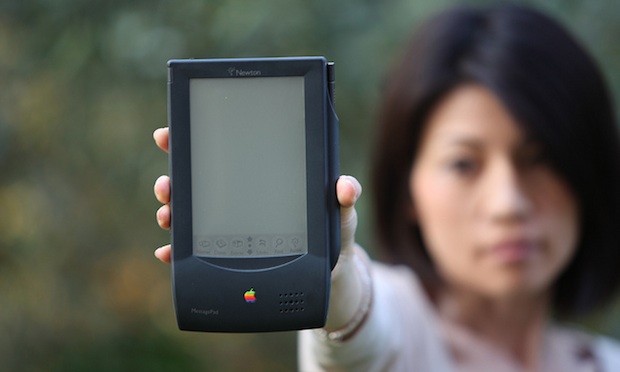
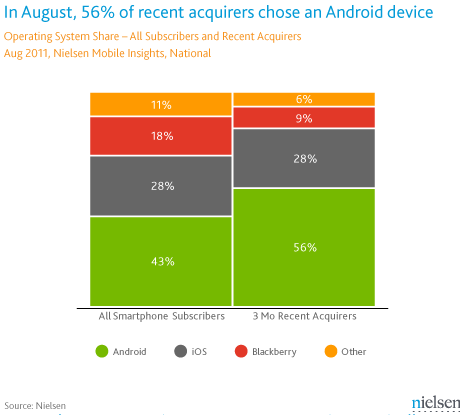
Apple is making good on decades of thought and promise, from its Knowledge Navigator concept and even the too-early-to-market Newton device. Meanwhile, where Apple dots fresh footprints on a new technology beach, others follow the trail. Google's Android OS has, according to recent analysis, achieved a new success and grown so rapidly that over the last three months in the U.S. 56% of smartphones activated were Android powered, twice that of Apple's stable 28% share. Google is sure to follow Apple's lead into speech recognition to keep its devices competitive, and Android-partnered firms like Samsung (which has a broad research history, including robotics) have already got varying degrees of speech recognition experience.
All of which means that soon your smartphone will be much smarter than you thought, and you'll interact with it in ways that you never dreamed possible, much more than merely using it to speak to someone over the phone lines. Isn't it about time we renamed the things? "Phone" is becoming anachronistic.
Update: It looks like Nuance is also adding support for Windows Phone 7 app developers, which underlines how much of an explosion in voice recognition is going to hit smartphones in the very near future.

Tuesday, September 27, 2011

Trend: innovation

Trend: Innovation
Title: Creating Amazing Customer Experiences Through "Soft" Innovation
Comment: "soft innovation" and "appropriation"... Translation "stealing" ;)

Link: http://www.fastcompany.com/1778870/using-soft-innovation-to-create-amazing-customer-experiences

Creating Amazing Customer Experiences Through "Soft" Innovation
BY FC EXPERT BLOGGER ERIC RYAN + ADAM LOWRYMon Sep 26, 2011
This blog is written by a member of our expert blogging community and expresses that expert's views alone.

To generate growth, companies seem to love "hard" product innovation--the type of expensive breakthroughs that require engineers and PhDs to toil away deep in the lab. Think Teflon, Viagra, or the Segway scooter. The challenge with this type of innovation is that it's expensive and high risk because it requires a lot of marketing dollars to educate consumers, not to mention the cost of developing the product itself. And because mass advertising is not as effective as it once was, it's becoming more lengthy and expensive to recapture this type of significant R&D investment. The growing glut of technology and patents is creating a lot of noise, making it harder to predictably execute big innovations. What if your amazing new product doesn't take off?
On the flip side, soft innovators establish new standards for quality, experience, and sales in their categories without actually doing anything profoundly innovative. Think Ben & Jerry's, which introduced the ice cream pint to the world as a more personal alternative to the half-gallon or gallon tub.
At Method, we try to balance soft and hard innovations. Don't get us wrong, we love big innovation -- such as our radical 8x laundry detergent, which has received global accolades -- but many companies underestimate the power of soft innovation, which can enhance the consumer experience and drive massive differentiation within a category. The advantage of a soft innovation is that it treads lightly on the R&D budget, requires less marketing support because consumers "get it" right away, and is predictably successful because the idea is familiar and the consumer learning curve is quicker.
Despite this comparably minimal risk, soft innovations have the power to disrupt or shift entire categories. Consider our cucumber all-purpose cleaner, our teardrop hand wash, or our new pump dish soap. Similar products have been done before, but each of ours brings a new scent, shape, or interaction to the customer experience.
For us, soft innovation includes the fragrance, design and witty personality of our products. None of this is individually groundbreaking, but collectively it has a big impact. Going back to the original big idea of "Aveda for the home," bringing a personal-care approach to home care was revolutionary, but the steps to get there were very evolutionary.
We build emotional points of difference into every product to create an engaging consumer experience. We do this by dramatically challenging existing alternatives on every front, from the use of unexpected fragrances like sea minerals to packaging copy that talks about angry squirrels. Great experiences are about being human, and humans want to be surprised. Basic categories like soap offer few opportunities for differentiation, so you have to sweat the details. The way the label feels in your hand, the shape of the bottle on your counter, the sound of the trigger being squeezed, the writing on the back of a bottle that makes you chuckle, even the little surprise of an owner's manual inside a candle box. Soft innovations collectively create an experience whenever you provide something different and unexpected.
Appropriation is a great technique for creating soft innovations. It's the act of taking a small part, like a quotation, from something created by someone else and using it for your own purposes without permission. It's a fancy word for stealing (on a small scale), but it's vital to any artistic business. We "steal" all the time. We stole the idea for the huddle from Innocent, and we stole the fragrance idea of sea minerals from Bare Essentials. Take the upside-down dish soap inspired by a stapler that sits on its end for easier use, or our original squeeze-and- pour laundry detergent bottle design borrowed from Act mouth rinse. Furthermore, we invite you to steal ideas from us. These are victimless crimes. There's a big difference between appropriating an idea from a foreign category and doing a knock-off of a whole product in your own.
Creating a knock-off (stealing other people's work to compete directly against them) says you're not only an asshole, but you also lack the talent to come up with your own original ideas. (Can you tell we deal with this all the time?) But appropriating ideas from another category is about being inspired and translating someone else's innovation to a new purpose. It's about spotting a trend in a distant category or country and recognizing that the same consumer motivation being satisfied there could also be satisfied in your category. It's a way to create more predictable innovation, because you are taking something proven and applying it to your product. In essence, the brand concept for Method -- Bring personal care to home care -- was an appropriation play. We looked for ways to translate what people loved about personal care and brought it to home care. Beautiful fragrances, like lavender, bottle designs that made a personal statement, and formulas that were healthy to touch -- all stolen from our friends a few aisles away.
We have specific categories that we continually look to for inspiration. Ours include housewares, cosmetics, and functional beverages, but we don't limit it just to these categories. The idea for our biodiesel shipping program that allows us to ship products using veggie oil was borrowed from local food distributors in San Francisco. We challenge you to use appropriation to avoid the gravitational pull of your category and apply lessons from others that will help achieve the vision you have set for yourself.
Whether you are inspired by an unrelated category or putting a unique spin on a small detail of your packaging, soft innovation will help you build great experiences without reinventing the wheel with every product you make.
Excerpted from The Method Method by Eric Ryan and Adam Lowry by arrangement with Portfolio Penguin, a member of Penguin Group (USA), Inc., Copyright © 2011 by Eric Ryan and Adam Lowry.

Trend: mobile OS wars and the rise of open source

Trend: mobile OS wars and the rise of open source
Title: Nielsen: Android Outsells iPhone 2-to-1
Comment: closed stack vs open.. Hardly seems a fair fight.

Link: http://allthingsd.com/20110927/nielsen-android-outsells-iphone-2-to-1/

Android’s market share gains in the U.S. continue to mount with no sign of slackening.
Twice as many consumers purchased Android phones over iPhones in the past three months, according to new data from Nielsen. 56 percent of the consumers who purchased a smartphone in the past 3 months opted for an Android device, while 28 percent picked an iPhone.

Not much of a surprise, really. Since its launch in 2007, Android’s growth as a mobile platform has been astonishing. That said, there’s an important caveat to remember when considering these metrics. The iPhone is really just one phone available on two U.S. carriers; Android is hundreds of handsets available on all of them.

Wednesday, September 07, 2011

Trend: encroachment on traditional pay models

Trend: encroachment on traditional pay models
Title: Bring in the Suits: Yahoo Hiring Strategic Advisers to Plot Next Moves
Comment: ok first.. The picture is hilarious.. But second.. Investment bankers at yahoo? Really? Bankers? Oh and carol was gassed by phone and sent a goodbye note to the staff from her iPad. Welcome to the future.

Link: http://allthingsd.com/20110906/bring-in-the-suits-yahoo-hiring-strategic-advisers-to-plot-next-moves/

Bring in the Suits: Yahoo Hiring Strategic Advisers to Plot Next Moves
SEPTEMBER 6, 2011 AT 8:54 PM PT

Yahoo is preparing to hire investment bankers and other strategic advisory firms, said sources close to the Silicon Valley Internet giant, as it seeks to figure out what to do next at the company.
The board of Yahoo, which ousted its CEO Carol Bartz today in a unanimous decision, is exploring a range of possible strategies to turn around its moribund growth, including possible acquisitions, shedding units, bringing in new investment partners and even taking the company private or selling it.
A sale is the least likely of options, said sources close to the situation, but — given today’s news — Yahoo might attract a lot of attention from investors seeking to take advantage of the company’s powerful but troubled assets.
“It is all on the table,” said one source close to the company.
Independent board member David Kenny, president of Akamai, is heading the strategic options committee, sources said, in charge of managing the process.
No advisor has been selected yet, but sources said Yahoo is likely to hire Allen & Co., which advises many tech and media firms. It is currently advising AOL, for example.
Other candidates would likely be the typical panoply of choices, including big investment banks like JPMorgan Chase, Goldman Sachs and Morgan Stanley and smaller boutique firms such as Qatalyst Group and Code Advisors.
Sources said whoever is hired will be charged first with doing an extensive review of the company that is more intensive than has been done before.
“There is a potential for enormous growth that the company has not been capitalizing on and should,” said another source. “The board needs to get this company on a trajectory for growth.”
Indeed, it does as it has not under the leadership of Bartz, as revenue growth has stalled and product innovation has lagged.
The company will also be conducting a search for a CEO, which will be difficult because any new top exec will want to be part of such a company-wide review.
Yahoo’s choice of an executive search firm has also not been determined, but is likely to be one of the big companies that specialize in the arena.
One thing is certain, said multiple sources: Yahoo will continue to focus itself as what it has previously called, a “premiere digital media company.”
What that mean now, of course, will be determined in the months ahead.